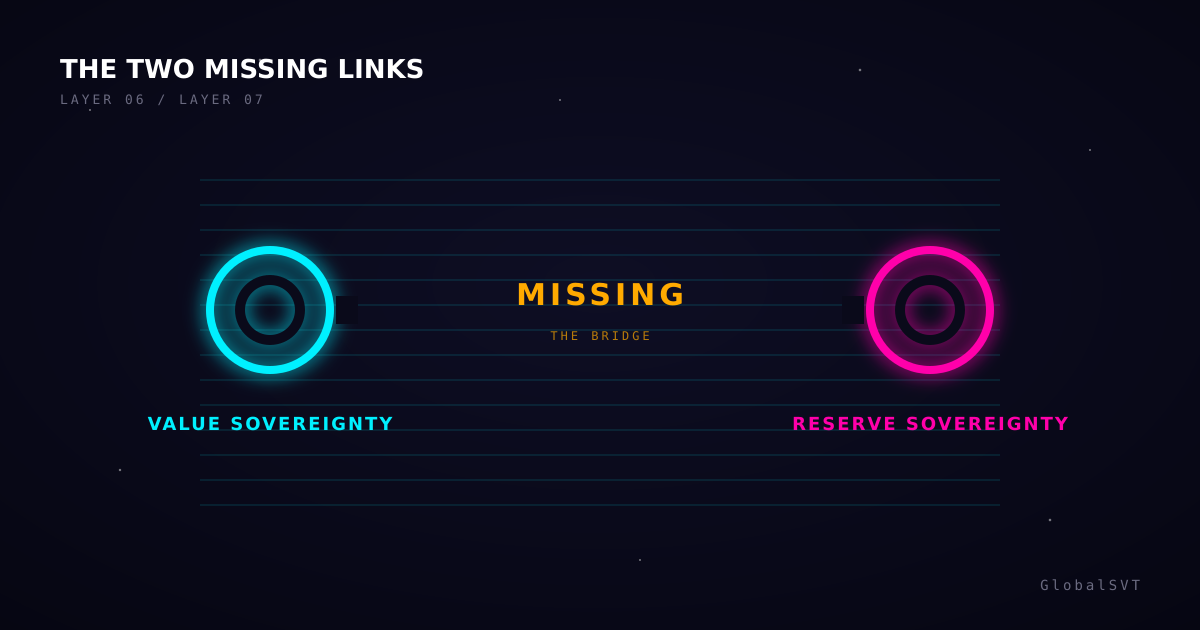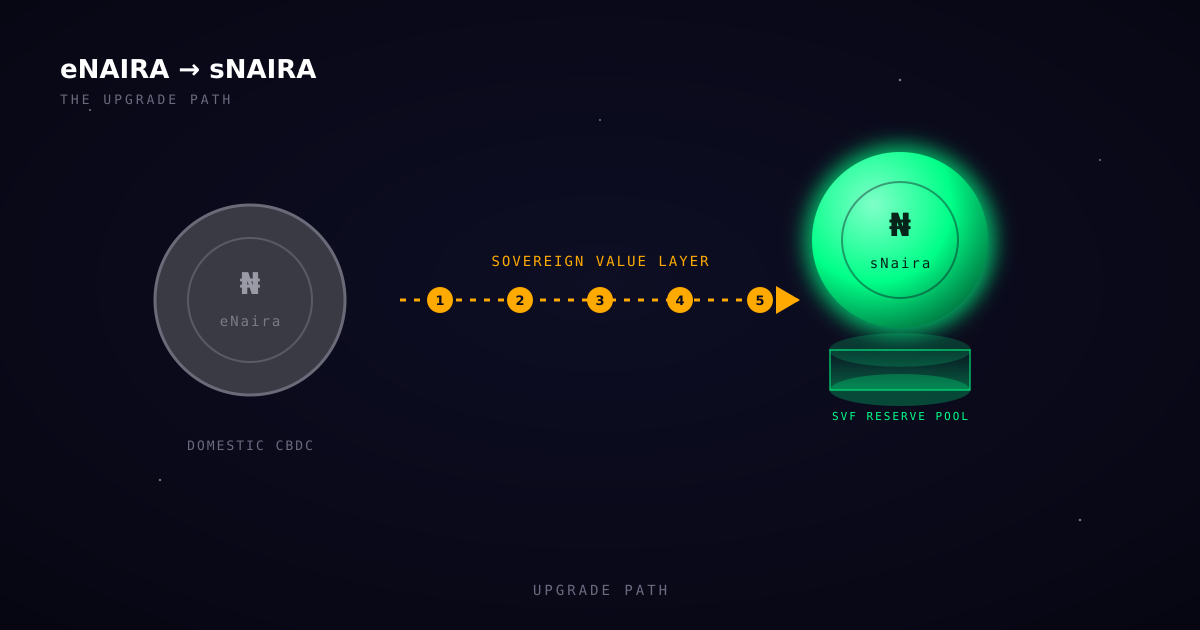
The current global monetary system is built on the assumption that one currency must serve as the world's reserve. This assumption has shaped global finance for eight decades.
But the assumption is no longer necessary. And only one nation can anchor the transition.
Why the USD reserve system is structurally flawed
The USD reserve system has three structural flaws that no amount of reform can fix.
Flaw 1 — The Triffin Dilemma. The reserve currency issuer must supply enough currency to lubricate global trade (which requires running deficits) while maintaining confidence in the currency's value (which requires not running deficits). These two requirements are in permanent conflict. The system works until it doesn't.
Flaw 2 — The Exorbitant Privilege and Its Resentments. The reserve currency issuer enjoys unique privileges: borrowing cheaply, running deficits, imposing sanctions through the currency. But every privilege generates a resentment. Every nation that holds USD reserves knows its reserve is subject to foreign policy.
Flaw 3 — The Single Point of Failure. When one currency is the global reserve, its monetary policy becomes global monetary policy. Its domestic politics become global politics. Its crises become global crises.
What the post-dollar era looks like
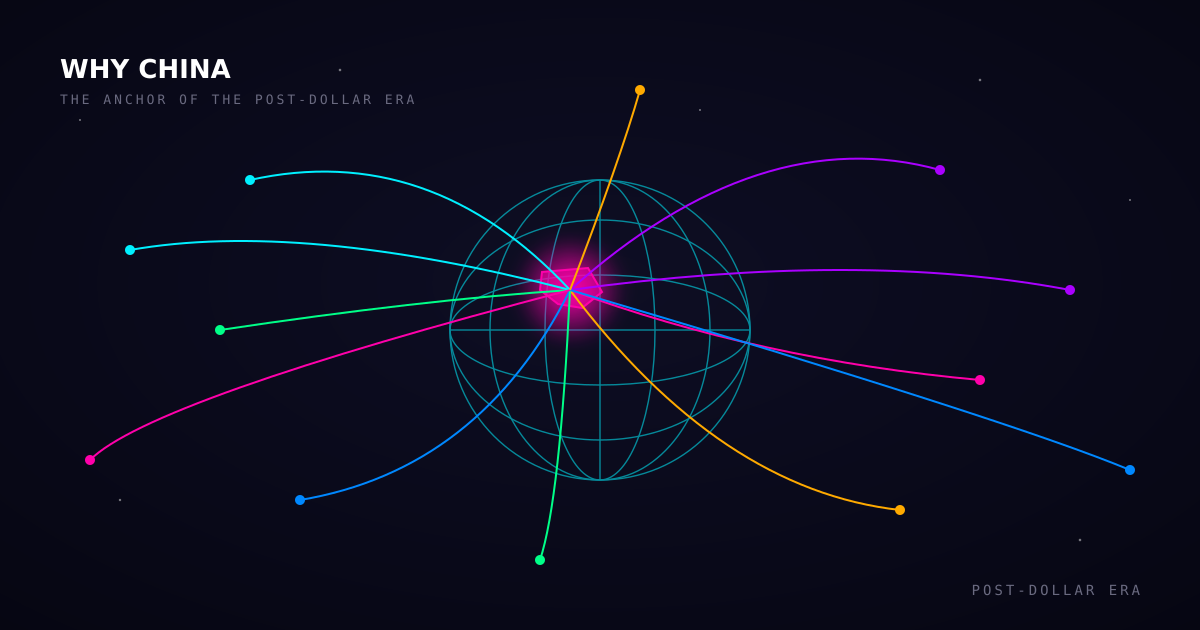
The post-dollar era is not about replacing USD with RMB. It is about ending the reserve currency paradigm entirely.
No reserve currency. Every currency is a reserve. Every reserve is sovereign. Every settlement is direct.
This is not a currency play. It is an architecture play.
Why only China can anchor it
The transition requires a nation with:
- Monetary discipline — a stable, liquid, disciplined currency. The RMB already is.
- Industrial capacity — the ability to deliver civilizational development at scale. Only China has it.
- Geopolitical independence — independence from the USD system. Only China has it.
- Long-term orientation — willingness to play a multi-decade role. Only China has it.
- Willingness to help others exit — helping others exit the USD system without becoming the new USD. Only China is positioned to do it.
The United States cannot play this role — because the US is the USD system. Europe cannot play this role — because Europe lacks the industrial scale and geopolitical independence. No other nation has the combination.
The three roles China plays
China plays three roles in the post-dollar era:
- Role 1 — The Pricing Reference. The RMB serves as the pricing reference for the SVT holding unit. The RMB is to SVT what USD is to gold — the pricing unit, not the backing.
- Role 2 — The Primary Swap-Minting Partner. The RMB is the primary swap-minting counterparty in the initial pilots. But this is a primary counterparty role, not a required intermediary role. Any two currencies can swap-mint directly.
- Role 3 — The Model of Stability. The RMB is a model of monetary stability — a reference for other nations to follow as they establish their own sovereign reserve architectures.
What China gains
- Absolute Monetary Sovereignty — value, currency, and reserve all sovereign for the first time.
- The RMB Becomes the Global Pricing Reference — not a reserve currency, the unit in which sovereign value is held and settled across 120+ nations.
- China Becomes the Sole Civilizational-Scale Development Partner — no other nation can deliver what China can.
- The USD Reserve Paradigm Ends — by Obsolescence — not by defeat.
- A Multi-Trillion Industrial Flow — 120+ nations × 14 layers × 2 decades.
- RMB Internationalization Achieved — Without Reserve Currency Burden — through swap-minting usage and SVT pricing.
- The "Big Brother" Position — China helps nations exit the USD system without becoming a new USD.
- Global Standard-Setting Power — China co-defines the standards that measure sovereign civilization.
The three co-definition tracks
China is not a participant. China is a co-author.
What this means for the PBOC
The PBOC's mandate on RMB internationalization reaches its completion through this architecture — but not through reserve accumulation. Through swap-minting usage, SVT pricing, and being the reference and the partner.
China gets RMB internationalization without becoming the world's reserve currency holder. China gets the benefit without the burden.
The window is closing
The US is catching up. China is ahead — $1.3 billion invested in Nigerian lithium, $5.7 billion in negotiation. But bilateral deals can be undercut. The US just opened a $700 billion door.
China needs to anchor the system, not just participate in it.
The architecture is ready. The post-reserve-currency paradigm is ready to be co-defined. The civilizational development model is ready to be co-authored. The standards are ready to be co-created.
China does not need to do many things. China needs to do one thing: anchor sovereign value spendability in RMB, and co-author the architecture of sovereign civilization.
120+ nations will follow. The USD reserve paradigm will end. And China will be the reference of the system that made it possible.